Monday, April 27, 2015

Lin Zexu Monument + First Jewish Cemetery

Since my last post ended just a block away, I thought I'd keep heading south on Bowery, until it ends into Chatham Square.
Before I get to the titular landmarks mentioned, I'd like to start at Confucius Plaza, which opened in 1975 to provide a limited-equity co-op for Chinese-Americans. The 44-story, brown brick skyscraper holds 750+ units, and all visitors are practically greeted by a bronze, 15ft (4.5m) statue of its namesake out front.


The building also houses a public school (Yung Wing Public School aka PS 124), as well as some stores, and a community center.
Interestingly enough, a segment of the Second Avenue Subway runs underneath the plaza. Though construction of the 8 mile (12k) tunnel under 2nd Ave has been going on, and off, since 1929, that part of the line was constructed around the same time as the high-rise. While called "The Line That Time Forgot", it is set to open December of 2016, and will run the T train.
Anyhow, as one heads further south one block, you'll come along Chatham Square (which is also also called Kimlau Square). Named after First Earl of Chatham, and Prime Minister of Great Britain before the American Revolution, William Pitt, the park holds two monuments.
First, is the Kimlau Memorial Arch, which was set up in 1961 by the American Legion in honor of those of Chinese ancestry who have died serving in the U.S. armed forces, and named after Lt. Benjamin Ralph Kimlau, who was shot down over Los Negros Island during WWII. The stele's calligraphy was designed by acclaimed poet Yu Youren.
The second monument is to Chinese scholar Lin Zexu, which is marked to:


LIN ZE XU
1785 - 1850
PIONEER IN THE WAR
AGAINST DRUGS


Lin Zexu, whose courtesy name is Yuanfu, was an official of the Qing dynasty. It is believed his moral conflict against opium was the impetus behind China's attempt to abolish trade with the British, which began the First Opium War (1839 - 1842).
At first, the Daoguang emperor approved of Lin Zexu's policies, but later damned him when China began to lose the war. After being scapegoated, he was exiled to the remote region of Xinjiang, but in 1847 become the Governor-General of the Yunnan province.
He died in 1850 while on route to help put down the Taiping Rebellion, but is remembered every June 3rd, known as Anti-Smoking Day, marking the day in 1839 where he confiscated 2.5 million lbs (1.2 million kilos) of illegal opium, which took 23 days to burn it all.


The southern end of Chatham / Kimlau Square meets the street St James Place, and walking just a few hundred feet down you'll find Chatham Square Cemetery (aka First Shearith Israel Graveyard) on St James Triangle Park.


This grave site is not only the first Jewish cemetery in all the Unites States, it is also the only structure left in Manhattan from the 1600s.


At the time the ground was first consecrated to inter bodies, 1656, the area wasn't even considered part of the city, as it was outside the bounds of New Amsterdam - well before it became New York in 1664.
While many of the graves are lost to construction, the small area that remains was made a landmark in 1903 by the American Scenic and Historic Preservation Society, a group which - strangely enough - dissolved in 1979.

Monday, April 20, 2015

The Porn Buddha + Edward Mooney House

The Rosemary was a small theater in Chinatown, which fit less than 500 ticket holders in their main room, and balcony. The cinema specialized in kung fu features and B-movie fare when it opened in 1978, but by the late 80s started showing porno on weekends. By 1990, porn flicks were their staple until they closed their doors in 1996.
Found at 133 Canal Street (between Bowery and Chrystie Street), they re-opened the following year as a Mahayana Buddhist temple.


Where there once was a canvas screen a thousand freaks freaked to, now sits a huge, golden Buddha. The statue is 16ft (5m) high, and is hollow within.


Along the walls of the main hall are lithographs depicting the Buddha's history and deeds, as well as ritual drums and instruments.
If you visit, be careful where you point your camera, as photos are not allowed in certain areas, and of certain religious objects and offerings.
After you've donated a buck, pick your fortune from the stacks of yellow bundles found throughout the place, and head a few blocks south to the corner of Bowery and Pell Street to see the Edward Mooney house.


Finished in 1789, it is now Manhattan's oldest row house still standing.
The home was constructed by affluent butcher Edward Mooney, on land confiscated from British Loyalist James De Lancey, so as to be near the slaughterhouses where he made his fortune. After his death in 1800, the joint was passed from buyer to buyer, one of which extended the structure in 1807. Since that time, the building had functioned as a saloon, hotel and even a brothel, but is now a bank.


The residence was made a landmark in 1966, and entered into the National Register of Historic Places in 1976.

Friday, April 10, 2015

7000 Oaks + High Line Park

In Manhattan, all along West 22nd Street, between 10th and 11th Avenues, is an oddity of an art project.


Titled 7000 Eichen - Stadtverwaldung statt Stadtverwaltung (English: 7000 Oaks - City Forestation Instead of City Administration), was an idea in "land art" created by German Fluxus artist Joseph Beuys (1921 - 1986).


This piece was first presented in 1982 at dOCUMENTA No. 7 - a contemporary art show held every 5 years in Kassel, Germany. In response to today's urbanization, the work has volunteers planting 7000 trees, each buddied up with a large basalt stone.


The work was inspired by Guy Debord and the Situationist International's Theses on Traffic (read that here), which was first published in Internationale Situationniste, issue #3, in 1959.


The 7000 Oaks project in New York City was funded by The Dia Art Foundation, and was first installed in 1988, with only five trees (Oak, Bradford Pear, Gingko, Sycamore, and Linden). In 1996, eighteen new trees were added (including the aforementioned, as well as Pin Oak, Elm Honey Locust, and Red Oak).


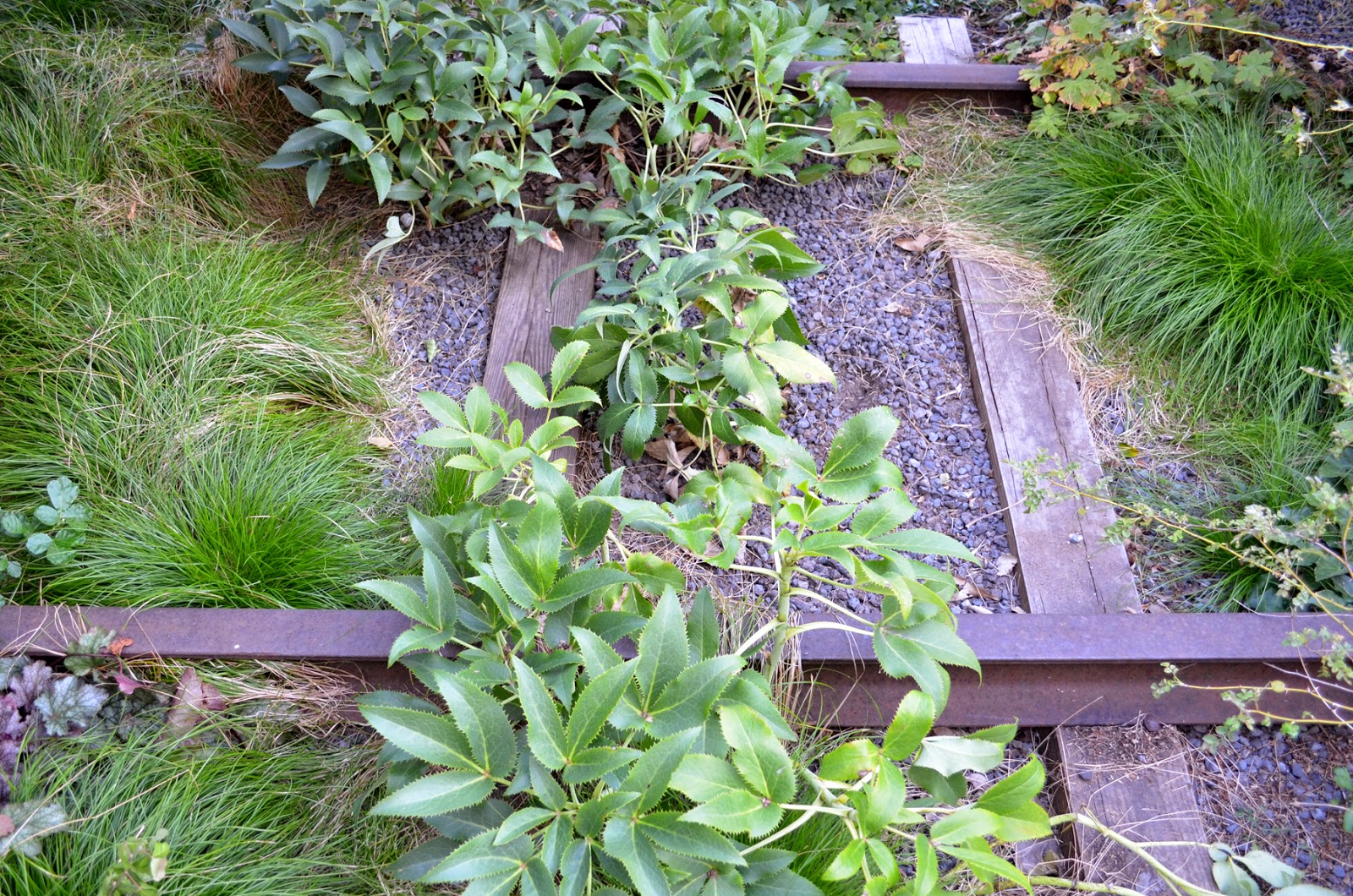
If you find yourself in the area to check these out, also take a walk down High Line Park, which is a 1.45-mile-long (2.33 km) garden park, created using a section of New York Central Railroad's West Side Line.


Originally built in 1831, most of it was demolished in 1960. Originally, it ran from 23rd Street to 129th Street, but was extended south to Spring Street in 1851.


The section that remains stretches from 12th Street to 33rd Street, but the park opened in phases, with the first being in 2009 (Gansevoort St to 20th St), then phase two in 2011 (20th to 30th St), and phase three in 2014 (finishing just before 33rd St). The section pictured first (the 30th Street Spur) will open this year.


Friday, March 27, 2015

Fort Tilden

Looking for a place to make a great dystopian music video, or film something in what looks like a Nevada nuclear test site?
Look no farther than Fort Tilden in Queens' Rockaway Peninsula.


It's an old Army base, that is now part of the Gateway National Recreation Area.
The area was first used as a United States Army installation some time during the War of 1812 (1812 - 1815). It was turned into a fort base in 1917 during the First World War, and named after 1874 Democrat governor of New York, Samuel Jones Tilden. The area was also used as Naval Air Station Rockaway, which was the departure point for the first transatlantic flight in 1919 (by a Curtiss NC-4 flying boat), as well as the US/NATO missile sites Nike Hercules (aka SAM-A-25) and Nike Ajax (aka SAM-A-7). From 1966 to 1980, the site was used to house the Army Reserve Post for 411th Engineer Brigade, plus the 187th Infantry Brigade's 5/5th Field Artillery, which had 105mm howitzer cannons active (until 1995) upon Battery Harris West...


...and Battery Harris East, which now has a public viewing platform atop.


The fort was deactivated in 1974, and turned over to the National Park Service, but it wasn't until it was officially decommissioned in 1996 that the land was open to the public.
The area is now a popular spot for birdwatchers, fishermen, and graffiti artists.


Many of the old buildings, such as the chapel, locomotive repair warehouse, and some of the plane hangars are now used as public art spaces for groups such as the Rockaway Artist Alliance, Rockaway Theater Company, the Museum of Modern Art and even punk rocker Patti Smith (whose granite cubes with etched quotes can be found throughout the entire Fort Tilden area).


It's a great place to check out some of the best up and coming artists in the New York City area, or just see the architectural future of mankind's retrogression.

Wednesday, March 18, 2015

Boerum Hill Mosaic House

In Brooklyn's Boerum Hill neighborhood, not far off the Bergen Street stop on the F or G line, is an art project many a local has enjoyed for almost 15 years, which all have dubbed "the Mosaic House".


Found at 108 Wyckoff Street, the project began a little after the 9/11 tragedy, when artist, and head of the Studio Program at Yeshiva University, Susan Gardner, decided to help cheer up her neighborhood.


She began by creating a large mosaic flower, and every summer since, Gardner adds a little more to the facade, in hopes to someday encase her entire brownstone in beads, glass, shells, tiles and buttons.


Gardner has claimed the work to be a celebration of life, and it has caught on, as residents of the neighborhood often leave donations of items to be added.


Before or after visiting the place, also drop by Susan Gardner's website (here) to see other wonderful works this quirky artist has created.